
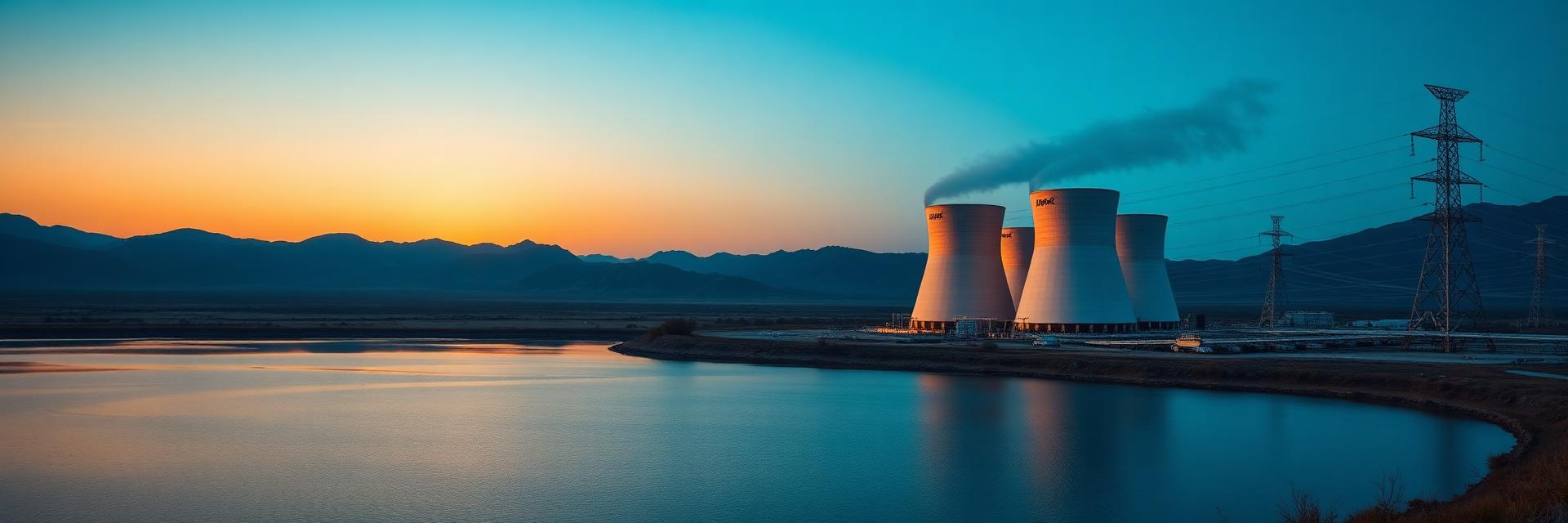
Why Africa Needs Nuclear — And Why Kenya Should Lead
Africa's grid is too small to industrialise on, too rain-dependent to rely on, and too expensive to compete with. A long analysis of Kenya's power system, the demand curve to 2040, what nuclear actually costs, and the eight things a serious programme would do first.
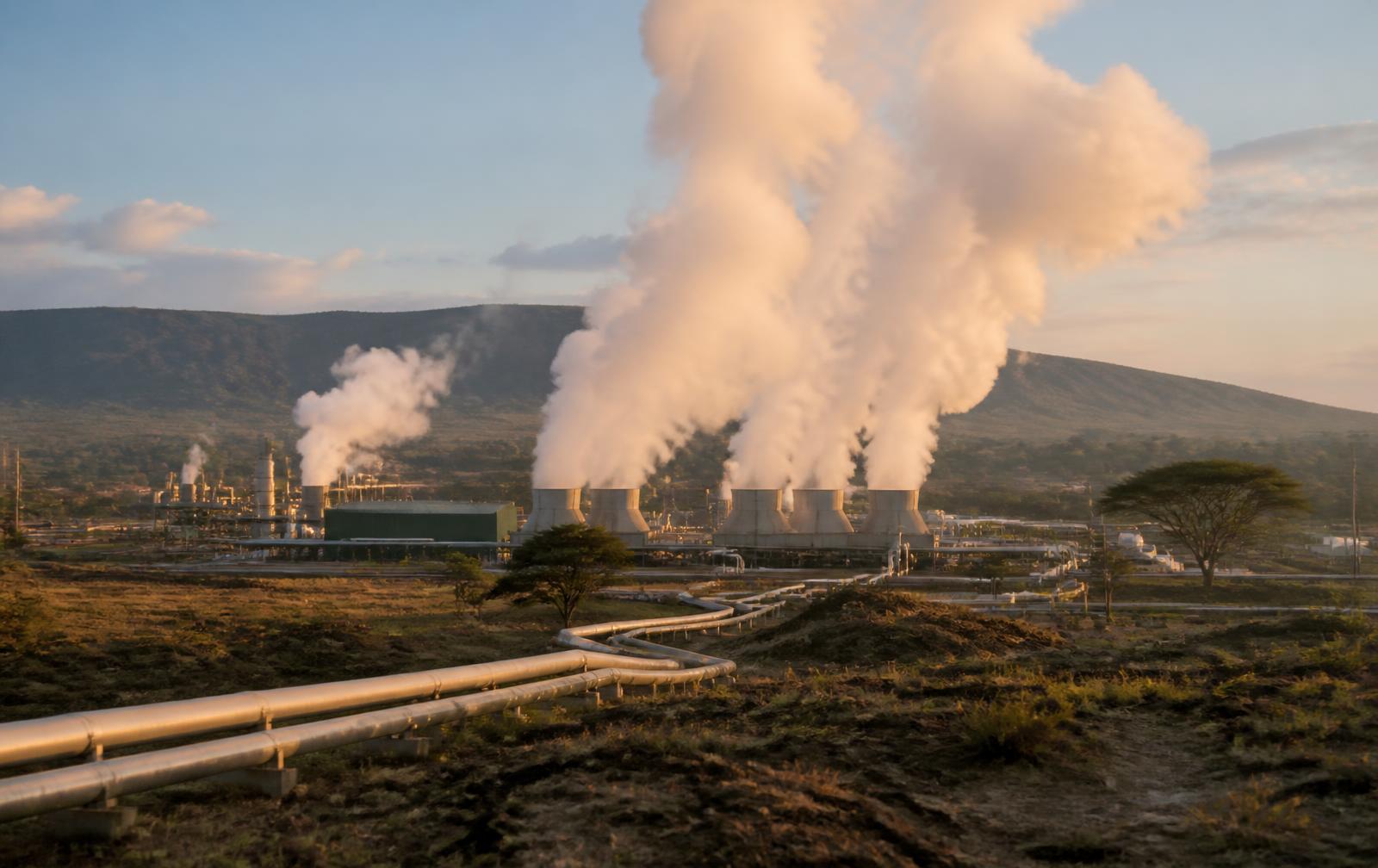
Africa is the only continent where the number of people without electricity has barely moved in a generation. Roughly 600 million Africans still live without a grid connection, and close to a billion cook on biomass. Yet the continent's installed generating capacity — everything, from Cairo's gas turbines to the smallest diesel genset in Kisangani — is about 260 gigawatts, less than Germany and Japan combined for a population more than ten times larger. Sub-Saharan Africa excluding South Africa has less generating capacity than Spain. This is not a statistical curiosity. It is the binding constraint on African industrialisation, and no amount of trade policy, digital strategy or climate finance will loosen it until the electrons exist.
The standard answer is renewables, and the standard answer is right as far as it goes. Africa holds around 60 percent of the world's best solar resource and has captured about one percent of global solar investment. The East African Rift is the richest untapped geothermal province on Earth. The Congo Basin alone could carry 40 gigawatts at Inga. The argument of this piece is not that Africa should build reactors instead of solar farms, wind farms and geothermal wells. It is that a continent planning to quadruple electricity consumption within twenty-five years, while running industry, rail, water treatment, fertiliser plants and data centres, needs a source of firm, dispatchable, low-carbon power that does not depend on rainfall, wind speed or the price of imported fuel oil. There are exactly three candidates for that role: hydropower, gas and nuclear. Two of them are running out of room.
Kenya is the clearest case on the continent, which is why most of this article is about Kenya. It has the most diversified clean grid in Africa, the most advanced nuclear programme south of the Sahara outside South Africa, the most instructive recent history of what happens when a country over-contracts intermittent and rain-dependent capacity, and the most transparent regulatory data. What breaks in Kenya will break everywhere else, only later and with less warning.
The African electricity deficit, measured properly
Electricity poverty is usually reported as an access rate, which is the least useful number available. Access counts a household with a connection, regardless of whether the connection carries 30 kilowatt-hours a year or 3,000. The average sub-Saharan African connected household consumes about 300 kWh a year. The average American household consumes roughly 10,500 kWh. A single refrigerator in a European home draws more electricity annually than a connected household in rural Kenya, Uganda or Zambia uses for everything.
Industrial consumption tells the same story more sharply. Manufacturing value added per capita in sub-Saharan Africa has been roughly flat since 1990, and the sectors that carry modern economies out of subsistence — steel, cement, fertiliser, aluminium, chemicals, cold chains, semiconductor-adjacent assembly, and now compute — are the most electricity-intensive activities humans perform. An aluminium smelter needs about 14,000 kWh per tonne and cannot tolerate an interruption of more than a few hours without freezing its pots. A nitrogen fertiliser plant needs continuous power and steam. A hyperscale data centre needs a reliability of 99.99 percent or better, which is why almost all of them in Africa today sit in South Africa, Kenya, Nigeria and Egypt, and why even there they arrive with diesel farms attached.
| Region | Population (m) | Installed capacity (GW) | Watts per person | Annual kWh per person |
|---|---|---|---|---|
| Sub-Saharan Africa (excl. South Africa) | 1,140 | ~105 | 92 | ~190 |
| South Africa | 63 | ~58 | 920 | ~3,400 |
| North Africa | 260 | ~95 | 365 | ~1,750 |
| India | 1,430 | ~460 | 322 | ~1,330 |
| China | 1,410 | ~3,300 | 2,340 | ~6,500 |
| European Union | 449 | ~1,050 | 2,340 | ~6,000 |
Read the fourth column slowly. To reach even India's current per-capita consumption — itself a low bar, roughly one-fifth of the European level — sub-Saharan Africa outside South Africa would need to multiply its generation by about seven. To reach the level associated with upper-middle-income industrial economies, it would need to multiply it by twenty or more, while its population grows by roughly a billion people by 2060. This is not a gap that efficiency closes. It is a construction problem measured in hundreds of gigawatts.
Why the deficit persists despite falling technology costs
Solar module prices have fallen by about 90 percent since 2010. Wind turbines are larger and cheaper. Battery packs have fallen by more than 85 percent. And yet Africa's share of global clean energy investment is roughly two percent. The reason is not technology cost; it is capital cost, offtake risk and grid capability.
First, capital. A solar plant is a machine for converting cheap money into electricity. Around 80 percent of the lifetime cost of a solar or wind project is financing the upfront build. When the weighted average cost of capital is 4 percent, a solar farm sells power at five cents. When it is 14 percent — a normal African sovereign-risk premium — the same physical plant, the same sunlight, must sell at nine or ten cents. Africa does not have worse sunlight. It has worse interest rates. The same arithmetic applies with even more force to nuclear, which is why financing structure, not engineering, is the decisive variable in every reactor programme discussed below.
Second, offtake. Independent power producers will not build without a creditworthy buyer. In most African markets the buyer is a state utility with negative equity, arrears to existing generators, and tariffs set below cost recovery by ministries that fear the street. Kenya Power, Eskom, ZESCO, ECG, TCN and NEPA-successor entities all belong on this list at various points in the past decade. Fixing the utility balance sheet is a precondition for everything else, nuclear included.
Third, the grid. Africa has spent fifteen years arguing about generation and almost none of that time building transmission. Kenya has curtailed wind at Turkana because the Loiyangalani-Suswa line was late. Ethiopia exports below its potential because interconnectors lag. Nigeria's grid collapses repeatedly not for lack of nameplate capacity but because the transmission network cannot carry or balance it. A reactor without a grid is a very expensive paperweight; so is a solar farm.
Kenya: the most instructive grid in Africa
Kenya generates roughly 13,000 GWh a year for a population of about 55 million. That is approximately 240 kWh per person, or about one seventieth of the Norwegian figure and one twenty-fifth of the Chinese one. Around 79 percent of Kenyans have some form of access, including off-grid solar home systems, which is high by regional standards; the volume each of them consumes is very low. Peak demand crossed 2,300 MW in 2024 against roughly 3,300 MW of installed capacity — a comfortable-looking reserve margin that conceals the real problem.
Kenya's mix is, on paper, one of the cleanest in the world: about 80 to 90 percent of electricity from renewable sources in a normal year, a share exceeded by almost no industrial economy. This is a genuine achievement, built over four decades of geothermal drilling at Olkaria and hydro development on the Tana. It is also the source of three structural vulnerabilities that a casual reading of the percentage misses entirely.
Vulnerability one: hydrology is not a plan
Roughly a fifth of Kenya's electricity comes from hydropower concentrated on the Seven Forks cascade — Masinga, Kamburu, Gitaru, Kindaruma, Kiambere — plus Turkwel and Sondu Miriu. In a good rainfall year these plants deliver cheaply and reliably. In a drought year, as in 2017, 2021 and most acutely 2022, Masinga approaches its minimum operating level, generation collapses, and the system substitutes heavy fuel oil at four to five times the cost. Kenya's electricity bills track East African rainfall with a lag of about two months, transmitted through the fuel-cost charge on every consumer bill.
This is not a problem that recedes with climate change; the modelling consensus for the Horn and East Africa is greater rainfall variance, with both deeper droughts and heavier flood events. A generation system that is 20 percent dependent on a river system with rising variance is a system that has outsourced its reliability to the weather.
Vulnerability two: intermittency without storage
Lake Turkana Wind Power, 310 MW and Africa's largest wind farm, is a genuinely excellent asset with capacity factors above 60 percent — world-class, and far better than European onshore wind. It is also famously the project whose transmission line arrived nearly two years late, during which Kenyan consumers paid deemed-generation penalties of roughly ten billion shillings for electricity that was generated and thrown away. Kipeto adds another 100 MW. Solar at Garissa, Kesses, Malindi and Radiant adds a few hundred more.
Wind and solar produce when the resource is available, not when the smelter needs them. Kenya's evening peak — roughly 6.30 to 10 pm, driven by residential lighting, cooking and television — sits precisely where solar output is zero and where Turkana's diurnal wind pattern is variable. Without storage, every additional gigawatt of variable renewable capacity increases the amount of firm capacity the system must hold in reserve. Batteries solve hours; they do not economically solve the multi-day, multi-week deficits that a failed rainy season produces.
Vulnerability three: the cost stack, and who pays it
Kenyan industrial consumers pay in the range of 15 to 22 US cents per kWh delivered, depending on tariff band, time of use and the prevailing fuel-cost and forex-adjustment charges. Ethiopian industry pays under four cents. South African industry, even after Eskom's tariff shocks, pays roughly eight to eleven. Vietnamese industry pays about seven to eight. A Kenyan textile plant competing for the same order as a Vietnamese one starts with an energy cost handicap of two to three times, before logistics, before finance, before duty.
| Cost element | Roughly what it is | Direction of travel |
|---|---|---|
| Energy charge (generation) | Payments to KenGen, IPPs and imports under PPAs | Rising with capacity payments on take-or-pay contracts |
| Fuel cost charge | Pass-through of thermal fuel when hydro is short | Volatile; spikes in every drought year |
| Forex adjustment | Dollar-denominated PPA obligations translated to shillings | Punishing during shilling depreciation |
| Transmission & distribution | KETRACO and KPLC network costs, including losses | System losses around 22 percent — high, slowly improving |
| Levies and VAT | REP levy, EPRA levy, WARMA levy, VAT | Politically sticky |
The 2021 presidential task force on power purchase agreements is worth dwelling on because it documented, in the state's own words, what the contracting model had produced: take-or-pay obligations for capacity the system did not need, prices well above regional comparators, contracts negotiated without competitive tender, and a utility paying for idle megawatts while load-shedding avoidable in principle. Kenya's problem was never purely a shortage of generation. It was a shortage of the right generation, contracted on the right terms, connected by lines that existed.
The demand curve that changes the argument
Everything above describes a system serving 2,300 MW of peak demand. The forward view is different in kind, not degree. Kenya's own Least Cost Power Development Plan, the Vision 2030 industrial targets, the electrification of the standard gauge railway, the planned expansion of irrigation and water pumping, the emergence of a domestic data centre market, and — the sleeper item — electric mobility in a country where two-wheelers dominate transport, together imply peak demand in the range of 5,000 to 9,000 MW by 2040 depending on the scenario chosen.
Suppose the reference case is right and Kenya needs roughly 9,000 MW of peak capability by 2040, implying something like 45,000 to 55,000 GWh of annual generation against 13,000 today. Where does it come from?
Geothermal is the obvious first answer and should be pushed as hard as drilling capacity allows. Kenya's realistic geothermal resource across the Rift — Olkaria, Menengai, Baringo-Silali, Suswa, Longonot, Eburru, Paka — is usually estimated at 7 to 10 GW, with perhaps 1 GW developed. But geothermal expands slowly: each wellfield takes eight to twelve years from exploration to commissioning, drilling risk is real and expensive, and the sector's actual delivery rate over the past fifteen years has averaged well under 100 MW a year. At historical rates, geothermal contributes perhaps 2 to 3 GW more by 2040 — transformative, and still not enough.
Hydro is largely built out on the Tana. Remaining sites are smaller, more contested, and more exposed to the rainfall variance discussed above. Regional imports from Ethiopia's GERD complex are cheap and already flowing through the 500 kV Sodo-Suswa interconnector, but importing a third of your baseload from a single upstream neighbour is a strategic exposure that no energy planner accepts voluntarily, and Ethiopia's own demand is climbing fast.
Solar and wind can and should be built at multi-gigawatt scale; they are the cheapest new energy Kenya can procure. But every gigawatt of variable capacity added to a grid that is already 20 percent rain-dependent raises the requirement for firm, dispatchable backup. That backup is currently heavy fuel oil at 16 to 28 cents. The choice, stated honestly, is not "nuclear versus renewables." It is "what provides the firm capacity that lets renewables be built at scale — imported fossil fuel, or something else?"
What nuclear actually offers, and what it costs
A nuclear plant is a machine with three properties that no other low-carbon source combines. It runs at capacity factors of 85 to 93 percent, meaning it produces almost all the time regardless of season, weather or time of day. It has extreme energy density: one AP1000 unit occupies roughly a square kilometre of site and produces about the same annual energy as 3,000 to 4,000 square kilometres of the best African solar with storage. And its fuel cost is a small fraction of total cost — typically under 10 percent — which means it is almost immune to the fuel-price shocks that whipsaw thermal-dependent grids, and its output price is knowable decades ahead.
Those advantages are bought with the single hardest characteristic in infrastructure finance: enormous upfront capital, spent over a long construction period, before a single shilling of revenue arrives.
The cost problem, examined without euphemism
Western nuclear construction over the past twenty years has been a financial disaster. Vogtle 3 and 4 in Georgia came in around 35 billion dollars for roughly 2.2 GW, more than double budget and seven years late. Hinkley Point C in Britain has escalated past 45 billion pounds. Flamanville 3 took seventeen years. Olkiluoto 3 took eighteen. Any African government contemplating nuclear should read those projects carefully, because they are the reference class that critics will and should cite.
But that is not the whole reference class. Over the same period South Korea built the Barakah plant in the United Arab Emirates — four APR-1400 units, 5.6 GW, a first-of-a-kind programme in a country with no prior nuclear industry — for roughly 24 to 32 billion dollars, with unit one connected about eleven years after the contract was signed and all four units operating by 2024. Barakah now supplies around a quarter of the UAE's electricity. China builds Hualong One units in five to six years at costs reportedly under 3,000 dollars per kilowatt. Russia's Rosatom, whatever one thinks of the geopolitics, has delivered VVER units in Belarus, Bangladesh, India and Turkey on build-own-operate or state-credit structures explicitly designed for countries that cannot self-finance.
The variable that separates the disasters from the successes is not the physics. It is design repetition, regulatory stability, supply-chain continuity and, above all, financing cost. Building one bespoke reactor with a novel design and a regulator learning on the job is the worst possible way to enter nuclear power. Building a standard, already-licensed design, from a vendor mid-way through a production run, with a fixed scope and a stable regulator, is a different project with a different cost.
| Project | Capacity | Overnight cost | Build time | What explains the outcome |
|---|---|---|---|---|
| Barakah, UAE (APR-1400 ×4) | 5,600 MW | ~$24-32bn (~$5,000/kW) | ~11 yrs to first power | Repeat Korean design, single EPC, sovereign balance sheet, stable regulator |
| Vogtle 3-4, USA (AP1000 ×2) | 2,234 MW | ~$35bn (~$15,000/kW) | ~15 yrs | First-of-a-kind, design changes mid-build, supply-chain collapse, EPC bankruptcy |
| Hinkley Point C, UK (EPR ×2) | 3,260 MW | £45bn+ (~$17,000/kW) | 15+ yrs (ongoing) | FOAK EPR, bespoke regulatory adaptation, high financing cost |
| Fangchenggang 3-4, China (Hualong One) | 2,360 MW | ~$7bn (~$3,000/kW) | ~6 yrs | Serial construction, domestic supply chain, low cost of state capital |
| Akkuyu, Türkiye (VVER-1200 ×4) | 4,800 MW | ~$20bn+ (BOO) | ~10 yrs to first unit | Vendor-financed build-own-operate; host pays via long-term PPA |
Small modular reactors: promise and caution
Much African nuclear discussion now centres on small modular reactors — units of 50 to 300 MW, factory-fabricated, shipped and assembled on site. The logic is compelling for African grids: a 1,000 MW unit on a 2,300 MW peak system violates the basic planning rule that no single contingency should exceed the system's spinning reserve, whereas a 100 MW unit does not. SMRs promise smaller absolute capital outlays, shorter build times and siting flexibility, including at inland or coastal industrial clusters.
The caution is equally clear. As of 2026 the number of commercially operating, Western-licensed SMRs is very small; the majority of designs are paper or near-paper. NuScale's flagship Utah project was cancelled in 2023 when costs rose past 89 dollars per MWh. Serial factory economics require an order book that does not yet exist. An African country that bets its baseload on a design still seeking first licensing is taking a schedule risk far larger than the technology risk. The rational posture is to watch SMRs closely, sign nothing exclusive, and let another country pay for the first-of-a-kind.
Kenya's nuclear programme, in detail
Kenya has been formally pursuing nuclear power since 2010, when the Nuclear Electricity Project Committee was established. That body became the Kenya Nuclear Electricity Board and, under the Energy Act 2019 and the Nuclear Regulatory Act 2019, the functions were split properly: the Nuclear Power and Energy Agency handles promotion, research, capacity building and the eventual owner-operator role, while the Kenya Nuclear Regulatory Authority is the independent safety regulator. That separation of promoter from regulator is the single most important institutional test in the IAEA framework, and Kenya has passed it on paper.
Kenya completed an IAEA Integrated Nuclear Infrastructure Review and has been working through the resulting recommendations. Site characterisation has focused on the coast — Kilifi and Kwale counties have been repeatedly named in candidate siting work — for the obvious reason that a thermal plant of that size needs a very large, reliable heat sink, and the Indian Ocean is the only one Kenya has. Coastal siting also places the plant near the Mombasa industrial load and the port through which heavy components must arrive.
Human capital has been the most visible workstream: hundreds of Kenyan engineers, scientists and regulators trained in South Korea, China, Russia, the United States and at IAEA facilities, plus a domestic pipeline through the University of Nairobi, JKUAT and the Kenya Nuclear Research Centre proposal. The research reactor question matters more than it looks: almost every successful national programme built a research reactor first, because it produces the regulatory experience, radiation-safety culture, isotope capability and trained workforce that a power reactor programme presumes.
The official timelines have slipped, repeatedly, from an original 2027 target for first power to something in the 2034-2036 range. This is unremarkable — every newcomer country slips — but it should be stated plainly rather than glossed. Kenya has not yet selected a vendor, has not closed financing, has not completed the environmental and social impact assessment for a specific site to construction standard, and has faced organised local opposition in Kilifi, some of it well-founded on process grounds. Nothing in the next three years produces an electron.
What the objections get right
Serious objections deserve serious answers rather than dismissal.
Cost and debt. Kenya's public debt exceeds 70 percent of GDP and debt service consumes a very large share of revenue. Adding a multi-billion-dollar sovereign obligation for a plant delivering nothing for a decade is a real fiscal risk. The answer is a financing structure that fits the country rather than a sovereign, balance-sheet-financed reactor: build-own-operate with a vendor carrying construction risk, a regional consortium spreading cost across the EAC power pool, or a phased SMR entry. Each of these is proven, available to Kenya today, and keeps construction risk off the public balance sheet.
Governance. The 2021 PPA task force showed how contracting failure inflates consumer bills. Nuclear procurement offers the same failure modes with an extra zero. A programme that repeats the PPA experience would be a generational fiscal error. The mitigation is procedural and unglamorous: competitive tender, published contracts, parliamentary scrutiny, an independent regulator with statutory budget protection, and a firm rule that no contract is signed without a public cost-benefit case.
Waste. Spent fuel is a genuine, permanent, intergenerational responsibility. It is also the most successfully contained industrial waste stream in existence: the total spent fuel produced by every commercial reactor in history would cover a football field to a depth of roughly ten metres, and none of it has ever harmed a member of the public in a country with a functioning regulator. Finland's Onkalo repository is operational. The obligation on Kenya is to fund decommissioning and waste management from the first kilowatt-hour sold, in a ring-fenced fund that a future finance minister cannot raid.
Safety. Per unit of energy produced, nuclear has a mortality record comparable to wind and solar and roughly 350 times better than coal, including Chernobyl and Fukushima. Fukushima's radiation release caused one confirmed radiation-attributed death; the evacuation caused over two thousand. This is not an argument for complacency — it is an argument that the safety case rests on regulatory competence, which is precisely the thing a newcomer state must build before it builds a reactor.
Grid size. The classic rule of thumb is that a single unit should not exceed roughly 10 percent of system peak. On a 2,300 MW peak, that implies units of about 230 MW — which no large Western vendor sells. By the mid-2030s, with peak demand at 5,000 to 6,000 MW and stronger interconnection to Ethiopia, Uganda and Tanzania through the Eastern Africa Power Pool, a 600 to 1,000 MW unit becomes defensible. This single constraint is the strongest technical argument for sequencing: build the grid and the regional interconnection first, then the reactor.
The continental picture
Kenya is not alone. South Africa has operated Koeberg since 1984 — two 970 MW units, recently granted a twenty-year life extension, supplying about five percent of national electricity and, notably, the most reliable generation on Eskom's fleet through the worst load-shedding years. Egypt is building El Dabaa, four VVER-1200 units totalling 4,800 MW, under a Rosatom contract with about 85 percent Russian state credit, with first concrete poured in 2022 and first unit targeted for the late 2020s. Ghana has selected a site and moved toward an SMR-first strategy with US partners. Rwanda has agreements on demonstration reactors. Nigeria, Uganda, Zambia, Niger, Ethiopia, Morocco, Tunisia and Sudan all have programmes at varying stages of seriousness.
| Country | Status, 2026 | Technology path | Financing model | Credible first power |
|---|---|---|---|---|
| South Africa | Operating (Koeberg, 1,860 MW) | Framatome PWR; new procurement debated | State utility | Operating since 1984 |
| Egypt | Under construction (El Dabaa, 4,800 MW) | Rosatom VVER-1200 ×4 | ~85% Russian state credit | Late 2020s |
| Kenya | IAEA Phase 2 | Vendor not selected; SMR options open | Undecided; BOO under study | Mid-2030s at best |
| Ghana | Phase 2, site selected | SMR-first (NuScale/Regnum partners) | Donor + vendor equity | Early-to-mid 2030s |
| Rwanda | Demonstration agreements | Dual Fluid / SMR demonstrators | Developer-funded pilots | Demonstration only |
| Nigeria | Phase 1-2, research reactor operating | Undecided | Undecided | Late 2030s |
| Morocco | Phase 1-2, desalination focus | Undecided | Undecided | Late 2030s |
Two continental facts deserve more attention than they get. First, Africa mines the fuel. Namibia and Niger are among the world's largest uranium producers; South Africa, Malawi, Tanzania and Botswana have significant resources. Africa exports uranium ore and imports refined petroleum. There is no law of physics requiring that arrangement to persist, though moving up the fuel-cycle value chain — conversion, enrichment, fabrication — is a multi-decade, non-proliferation-sensitive undertaking that no single African state will attempt alone.
Second, the regional pools change the arithmetic. The Eastern Africa Power Pool, the Southern African Power Pool and the West African Power Pool exist precisely to let countries share large, lumpy assets. A 1,200 MW reactor is an absurd proposition for Kenya alone in 2030 and an entirely rational one for a Kenya-Tanzania-Uganda-Ethiopia market with 20 GW of combined peak and functioning interconnection. The unit of analysis for African nuclear is the pool, not the state.
What a serious programme would do
Suppose a Kenyan energy minister accepted this analysis. What would the next decade actually contain? Eight things, in rough order.
One: fix the utility before financing the plant. No reactor is bankable against an offtaker with negative equity and arrears. Kenya Power's balance sheet, the 22 percent system-loss rate, and the legacy PPA overhang are the precondition, not a parallel workstream.
Two: build transmission at twice the current rate. Every gigawatt of generation Kenya has stranded, curtailed or delayed has been a transmission failure. Nuclear at the coast requires a heavy backbone to Nairobi and the Rift industrial zones that does not exist today.
Three: exhaust geothermal first, and faster. Baringo-Silali, Menengai and Suswa should be pushed with derisked exploratory drilling funded publicly and wellfields tendered to private developers. Geothermal is firm, domestic, cheap and already proven in Kenya. If the drilling rate tripled, the nuclear decision could be smaller and later — which would be a good outcome, not a defeat.
Four: interconnect aggressively. Ethiopia, Tanzania, Uganda and eventually the wider pool. Interconnection is the cheapest firm capacity available and it is also what makes a large unit tolerable later.
Five: build the regulator before the reactor. A credible programme rests on three constituencies working in step: the regulators, the implementers, and the most forgotten of the three — the nuclear advocates, the civic and industry bodies such as NUeB Kenya that carry the public argument between technical milestones. KNRA needs statutory budget independence, competitive salaries against the vendor's own engineers, and international peer review on a fixed cycle. NuPEA needs delivery capacity matched to the schedule it publishes. And advocacy needs standing at the table, not an invitation after the fact, because public consent is built years before concrete is poured. A regulator that cannot say no is not a regulator; an implementer without a public mandate is not a programme.
Six: build a research reactor. It is comparatively cheap, produces medical isotopes Kenya currently imports, trains the workforce, and gives the regulator a decade of real licensing and inspection practice on a low-consequence facility.
Seven: structure the deal so Kenya does not carry construction risk.Build-own-operate, a fixed-price EPC with a vendor balance sheet behind it, or a regional special-purpose vehicle. Vendors compete hard for first-mover markets, and Kenya should use that competition to transfer construction risk where it belongs.
Eight: publish everything. The feasibility study, the site assessment, the tender documents, the contract. The Kilifi conversation is a governance opportunity, not noise. Programmes that publish their numbers earn their social licence, and a nuclear programme with social licence is the most durable infrastructure asset a country can own.
The conclusion
Nuclear power is not the only thing Africa needs, and anyone selling it as a single answer should be distrusted. Transmission, distribution-loss reduction, utility solvency, geothermal drilling where the resource exists and gigawatt-scale solar and wind procured through competitive auctions all belong in the same plan. But they are the complement to nuclear, not the substitute for it.
The argument that Africa needs nuclear rests on three claims that survive scrutiny. First, that Africa's demand trajectory is not a 20 percent increase but a five-to-twenty-fold one, and no continent has ever industrialised on intermittent power alone. Second, that the firm, dispatchable, low-carbon sources are hydropower — which is finite, contested and increasingly unreliable under climate variance — and nuclear; the alternative firm source is imported fossil fuel, which is precisely the dependency that keeps African industrial tariffs at three times Asian levels. Third, that the countries which will have nuclear in 2050 are the ones doing the institutional work now, because the lead time is fifteen to twenty years and cannot be compressed by urgency later.
Kenya's case is the strongest on the continent outside South Africa and Egypt. It has the regulatory architecture, the trained cadre, the coastal siting option, the regional pool, and — decisively — a rain-dependent grid whose vulnerability is demonstrated every drought. Its constraints are real: debt, procurement history, transmission lag and a system that is still small for a large unit today. Those constraints argue for sequencing and structure. They are engineering and financing problems with known solutions, and every one of them is being worked on right now.
The judgment this piece arrives at is therefore clear. Kenya should press ahead. It should run the next eight years as a delivery programme rather than a study exercise: close the legal and regulatory gaps, license the site, build the grid, keep drilling geothermal, stand up the research reactor, deepen interconnection, and bring the first unit to financial close on a structure that protects the public balance sheet. Doing all eight has independent value even before the first concrete is poured — which is exactly what makes it the right bet.
Africa needs nuclear power. Kenya is ready to lead it, and the case is a strong one: the institutions that make nuclear possible take twenty years to build, the continent's demand curve does not wait, and the country that starts seriously now is the country that has firm, clean, affordable power when it matters most.
Notes
- International Energy Agency, Africa Energy Outlook 2024; IEA, World Energy Outlook 2025, access and investment chapters.
- Energy and Petroleum Regulatory Authority (Kenya), Energy & Petroleum Statistics Report, FY 2023/24 and 2024/25; EPRA retail tariff determinations.
- Kenya Power and Lighting Company, Annual Report and Financial Statements, 2023 and 2024; KenGen annual reports.
- Republic of Kenya, Report of the Presidential Task Force on the Review of Power Purchase Agreements, 2021.
- Ministry of Energy and Petroleum (Kenya), Least Cost Power Development Plan, most recent published update; Kenya National Energy Efficiency and Conservation Strategy.
- International Atomic Energy Agency, Milestones in the Development of a National Infrastructure for Nuclear Power (NG-G-3.1 Rev. 1); IAEA INIR mission reports; Power Reactor Information System (PRIS) database.
- Nuclear Power and Energy Agency (Kenya) programme documentation; Nuclear Regulatory Act 2019; Energy Act 2019.
- World Nuclear Association country profiles for South Africa, Egypt, Ghana, Kenya, Nigeria and Rwanda, 2025-26 updates.
- Lazard, Levelized Cost of Energy+ (v17), 2024; IEA/OECD-NEA, Projected Costs of Generating Electricity, 2020 edition and subsequent updates.
- Sovacool et al. and Markandya & Wilkinson on comparative energy mortality; UNSCEAR reports on Fukushima health effects, 2020-2021.