

AfCFTA: The Continental Market That Must Still Be Built
The African Continental Free Trade Area is the largest free-trade agreement on Earth by member states. Five years after trading began, only a sliver of African commerce moves under its rules. What went right, what stalled, and what would unlock it.
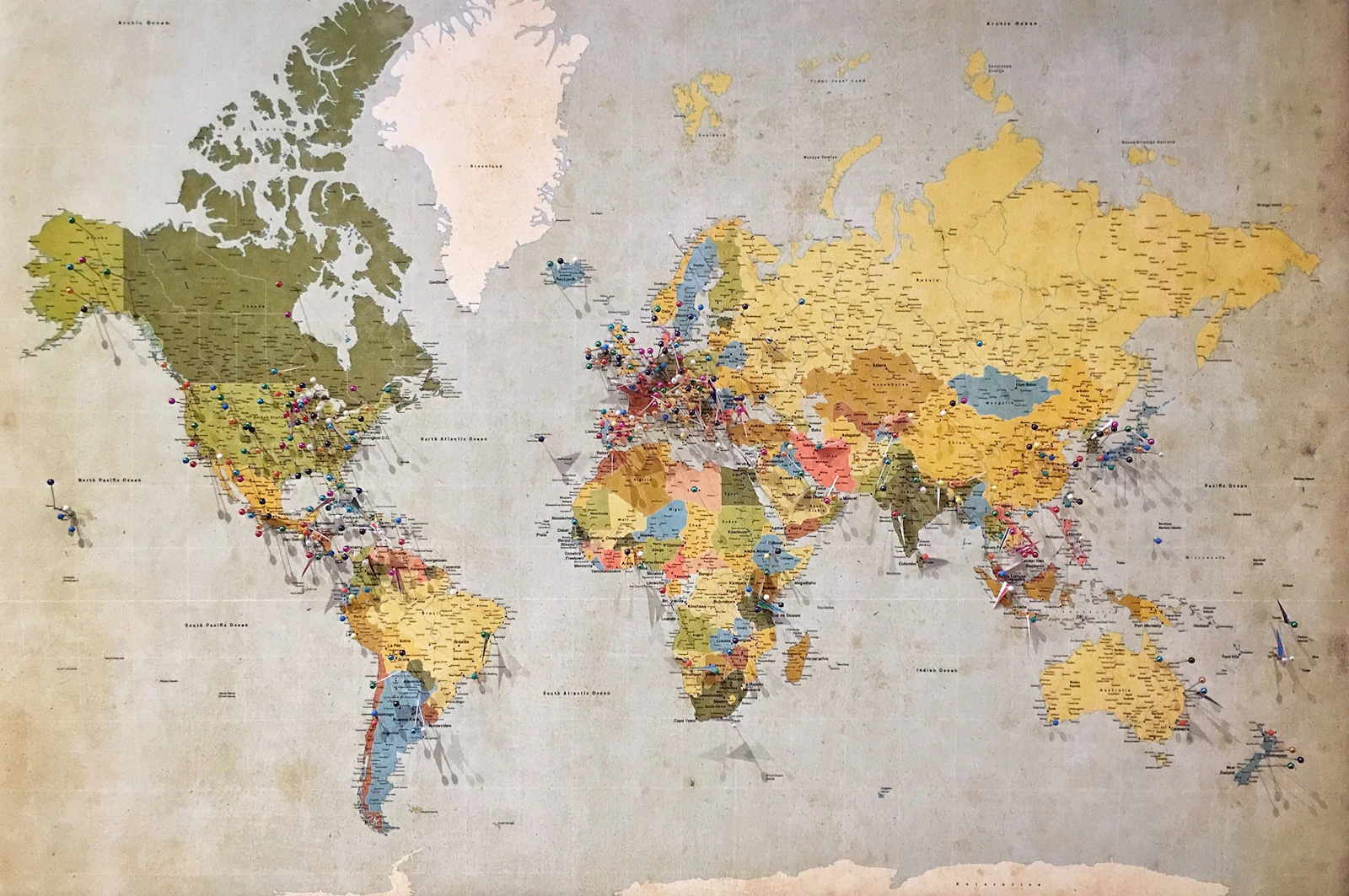
The African Continental Free Trade Area, agreed in Kigali in 2018 and switched on for trade in January 2021, is the largest free-trade agreement in the world by number of member states. Fifty-four of the fifty-five African Union members have signed it, and by mid-2026 forty-nine have deposited instruments of ratification. On paper it binds a market of about 1.4 billion people and a combined output near 3.4 trillion dollars into a single customs space, with tariffs on 90 percent of goods scheduled to fall to zero over a phased calendar. In practice, five years after trading began, only a thin slice of Africa's own commerce moves under AfCFTA rules, and the share of intra-African trade in the continent's total exports still hovers around 15 percent, roughly where it stood before the agreement was signed.
The distance between the treaty and the traffic is the subject of this note. It is not explained by absent politics or by a lack of demand. It is explained by what a trade agreement can and cannot do on its own. AfCFTA removes a tariff line; it does not lay a road, digitise a customs post, harmonise a phytosanitary certificate, or persuade a bank in Lagos to accept a letter of credit denominated in Kenyan shillings. Each of those remains a separate project, and each of them is where African trade actually breaks.
Who trades with whom on the continent, and what stops them from trading more, is therefore the practical question. It decides whether the world's youngest region converts a treaty of historic ambition into factories, farms and jobs, or into another framework that outperforms in communiqués and underperforms in customs yards.
Where AfCFTA came from
African integration is older than most of the states doing it. The Abuja Treaty of 1991 set out a six-stage roadmap toward an African Economic Community by 2028, built on the Regional Economic Communities — ECOWAS in the west, EAC in the east, SADC and COMESA in the south and centre, the Arab Maghreb Union in the north, and the smaller blocs of Central Africa and the Sahel. The RECs were meant to be the building blocks; in practice they overlapped, competed and, in the case of the Tripartite Free Trade Area agreed in 2015 among COMESA, EAC and SADC, only partly delivered.
AfCFTA was the response. Negotiated between 2015 and 2018 under an African Union mandate, signed by forty-four countries at the Kigali extraordinary summit in March 2018, and brought into force in May 2019 after the twenty-second ratification, it was designed to pull the continent's fragments into a single trade regime with a common secretariat in Accra, a common dispute-settlement mechanism, and phased protocols on goods, services, investment, competition, intellectual property, digital trade and women and youth in trade.
Seven years in four moves
| Phase | What was agreed | Milestone | What changed on the ground |
|---|---|---|---|
| Negotiation (2015-2018) | Framework agreement; Phase I protocols on goods and services | Kigali signing, March 2018 | 44 signatures on day one; a common negotiating text for the first time |
| Entry into force (2019) | 22nd ratification triggers legal effect | Niamey summit, July 2019 | Secretariat established in Accra; operational rules drafted |
| Trading begins (2021) | Start of preferential trade under AfCFTA tariffs | 1 January 2021 | Symbolic start; most tariff schedules and rules of origin not yet finalised |
| Guided Trade Initiative (2022-2026) | Pilot shipments under agreed rules of origin | Expanded to 39 countries by 2026 | First real AfCFTA-badged shipments; volumes remain small relative to total trade |
The single most consequential decision of that arc was the quietest. Between 2019 and 2022 the African Export-Import Bank and the AfCFTA Secretariat built the Pan-African Payment and Settlement System, a platform that lets a Ghanaian importer pay a Kenyan exporter in cedis and receive shillings without routing the transaction through a correspondent bank in New York or London. The rail is still small — under a billion dollars of settled volume through 2025 — but it removes a friction that no tariff cut could touch.
The scaffolding: institutions and instruments
A continental market needs more than a signed treaty. It needs an authority to interpret it, a rail to settle payments across twenty-eight national currencies, a fund to cushion the states that lose tariff revenue in the transition, and a set of rules — of origin, of standards, of digital trade — that firms can actually plan against. AfCFTA has assembled most of these pieces; several of them are new and untested.
The instruments that carry the market
| Instrument | Purpose | Status, 2026 | Effect on the private sector |
|---|---|---|---|
| Protocol on Trade in Goods | Phased tariff cuts on 90 percent of goods | Tariff schedules for 47 states; rules of origin ~88 percent agreed | Preferential access once rules of origin are finalised and certified |
| Protocol on Trade in Services | Liberalisation of five priority sectors | Specific commitments submitted by most states | Opens finance, transport, communication, tourism and business services |
| Guided Trade Initiative | Pilot AfCFTA-badged shipments | 39 states, 96 products by mid-2026 | Live proof that the paperwork can move a container |
| Pan-African Payment and Settlement System | Local-currency cross-border settlement | 15 central banks live; over 150 commercial banks connected | Cuts the FX toll that has long taxed intra-African trade |
| Adjustment Fund | Compensates revenue losses; funds competitiveness | Base Fund capitalised; General Fund seeking 10 billion dollars | Political cover for governments that lose tariff revenue |
| Digital Trade Protocol | Cross-border data flows, e-commerce, digital ID | Adopted February 2024; implementation guidelines pending | First continental framework for the digital economy |
| Protocol on Women and Youth in Trade | Targeted access for small traders and women-led firms | Adopted 2024; national action plans in draft | Formalises the informal cross-border trade that already moves the continent |
The instruments are real and, in most cases, further along than critics allow. Their weakness is that each one lands on a different national administration, and the depth of implementation now varies more between capitals than the treaty itself does between clauses.
An agreement of many members and very little trade
Start with the raw shape of African commerce. In 2024 total African exports were worth about 651 billion dollars. Intra-African exports were about 100 billion dollars, roughly 15 to 16 percent of the total. The comparable figure is close to 60 percent in the European Union and the Asian trading bloc that took shape around RCEP, and about 40 percent in North America under USMCA. The continent trades disproportionately outside itself, and disproportionately in raw materials.
The African Union's 2063 agenda targets intra-African trade near 50 percent of the continent's total. Today's 15 percent is roughly where it stood before AfCFTA. Closing the gap is the arithmetic these pages are about.
What Africa sells to Africa
| Corridor | Leading exports | Approx. share of intra-African trade |
|---|---|---|
| Southern Africa (SADC) | Manufactured goods, machinery, refined fuels, vehicles | ~40% |
| East Africa (EAC + Horn) | Agricultural produce, cement, steel, processed foods | ~20% |
| West Africa (ECOWAS) | Fuels, cocoa products, cement, consumer goods | ~25% |
| North Africa (AMU) | Fertilisers, chemicals, electrical machinery | ~10% |
| Central Africa (ECCAS) | Timber, minerals, petroleum products | ~5% |
The pattern is telling. The one corridor that already looks like an integrated market — southern Africa around South Africa — trades manufactured goods with its neighbours. The others trade what they extract. Widening the continental market therefore depends on widening the manufacturing base outside a single southern anchor, and that is not something a tariff schedule can do on its own.
Where the friction actually lives
AfCFTA meets a continent whose logistics still tax the trade it wants to grow. A container from Mombasa to Kinshasa can cost more than the same container from Shanghai to Mombasa. A truck crossing three ECOWAS borders spends more time at the posts than on the road. A pharmaceutical firm registering the same product in five African markets files five separate dossiers to five separate regulators. The tariff cut is not the binding constraint. Four other filters are.
The four filters holding the market back
| Filter | What it costs | Where it bites |
|---|---|---|
| Non-tariff barriers | Estimated 10-30 percent equivalent tariff on many product lines | Standards, licensing, quotas, arbitrary inspections |
| Trade logistics | Africa's logistics costs run 50-175 percent above the world average | Roads, corridor delays, single-country ports, border posts |
| Payments and FX | Routing through third-currency correspondents adds 3-5 percent per transaction | Cross-border settlement, letters of credit, currency convertibility |
| Rules of origin and certification | Slow certification erodes the preference before it is used | Customs authorities, chambers of commerce, product-specific criteria |
The World Bank's own modelling illustrates what unblocking these filters is worth. If AfCFTA is implemented in full, alongside serious trade-facilitation and logistics reforms, it could raise Africa's income by about 450 billion dollars by 2035, boost intra-African exports by more than 80 percent, and lift 30 million people out of extreme poverty. Almost all of that upside sits in the second half of the sentence. Tariff removal alone yields a small fraction of it.
What the fast integrators did differently
The East African Community offers the closest working laboratory. Between 2005 and 2015 the bloc built a customs union, a common market and a monetary-union roadmap, and its intra-regional trade share rose from roughly 8 percent to about 20 percent. Three moves did most of the work: a Single Customs Territory that let goods clear once at the port of entry, a One-Stop Border Post programme that turned two customs stops into one, and a Northern Corridor authority that ran the Mombasa-Kigali route as a single project rather than five national ones.
Southern Africa's integration around South Africa followed a different playbook — a dense industrial base, a common currency zone in the CMA and a set of manufacturing supply chains that reach across borders without asking the treaty for permission. In both cases the lesson is the same. Integration is a logistics achievement first, a legal one second. AfCFTA's next decade will be judged less on the protocols it signs than on the corridors it clears.
What would unblock AfCFTA
Five moves would convert the treaty into traffic. First, finish the rules of origin — the last twelve percent is disproportionately the manufactured goods where the preference actually matters. Second, scale the Guided Trade Initiative from a pilot into the default channel, publishing customs data quarterly so that firms can see the rail is real. Third, capitalise the Adjustment Fund to its 10-billion-dollar target so that finance ministers stop treating tariff loss as a reason to slow-walk implementation.
Fourth, connect the last dozen central banks to the Pan-African Payment and Settlement System, and require commercial banks in participating jurisdictions to quote intra- African payments through it. Fifth, treat the six or seven main corridors — Abidjan- Lagos, Northern Corridor, Central Corridor, North-South, Trans-Kalahari, Maghreb-Sahel, Djibouti-Addis — as continental infrastructure, with joint procurement, joint one-stop posts and joint digital single windows. None of that requires renegotiating the treaty. All of it requires the political attention that renegotiation usually absorbs.
Conclusion
AfCFTA is the most ambitious integration project the world has attempted this century. It was assembled with unusual speed, ratified by an unusual majority, and equipped with instruments that on paper rival anything in Brussels or Jakarta. It has also arrived at the point where every ambitious treaty arrives: the ceremony is over, and the customs yard is where the promise is redeemed. Whether the continental market becomes the engine of African industrialisation, or the most decorated framework of the 2030s, will be decided not by another summit but by the four filters above. The good news is that clearing them is largely within Africa's own hands. The harder news is that the twenty or so governments that would have to move together have not yet found the habit of doing so on this timetable. The next five years of AfCFTA will tell us whether they will.
Notes
- African Union, Agreement Establishing the African Continental Free Trade Area, Kigali, 2018; AU depositary notifications 2019-2026.
- AfCFTA Secretariat, Annual Report 2024; Guided Trade Initiative operational updates 2022-2026.
- UNCTAD, Economic Development in Africa Report 2024; UNECA, Assessing Regional Integration in Africa (ARIA) X, 2024.
- World Bank, The African Continental Free Trade Area: Economic and Distributional Effects, 2020, updated 2024.
- Afreximbank, PAPSS operational bulletins 2023-2025; African Development Bank, African Economic Outlook 2025.